Why ingredients & value matter
Australian dogs are living far shorter lives than they could.
The average dog reaches its early teens. The oldest ever made it to twenty-nine. What goes in the bowl every day is one of the biggest things we, as owners, actually get to control.
dental disease
overweight
face cancer
Chronic disease is quietly shortening dogs' lives.
Most dogs will face a preventable chronic condition at some point. What they eat, along with everyday care, plays a real part in how early it shows up.
“These outcomes aren't random. Diet and daily care are among the biggest factors owners can actually influence.”
of dogs over three show signs of dental disease
of Australian dogs are overweight or obese
will face cancer in their lifetime
The lifespan gap
Typical lifespan
Potential lifespan
The oldest verified dog ever was Bluey, an Australian Cattle Dog who reached 29.7
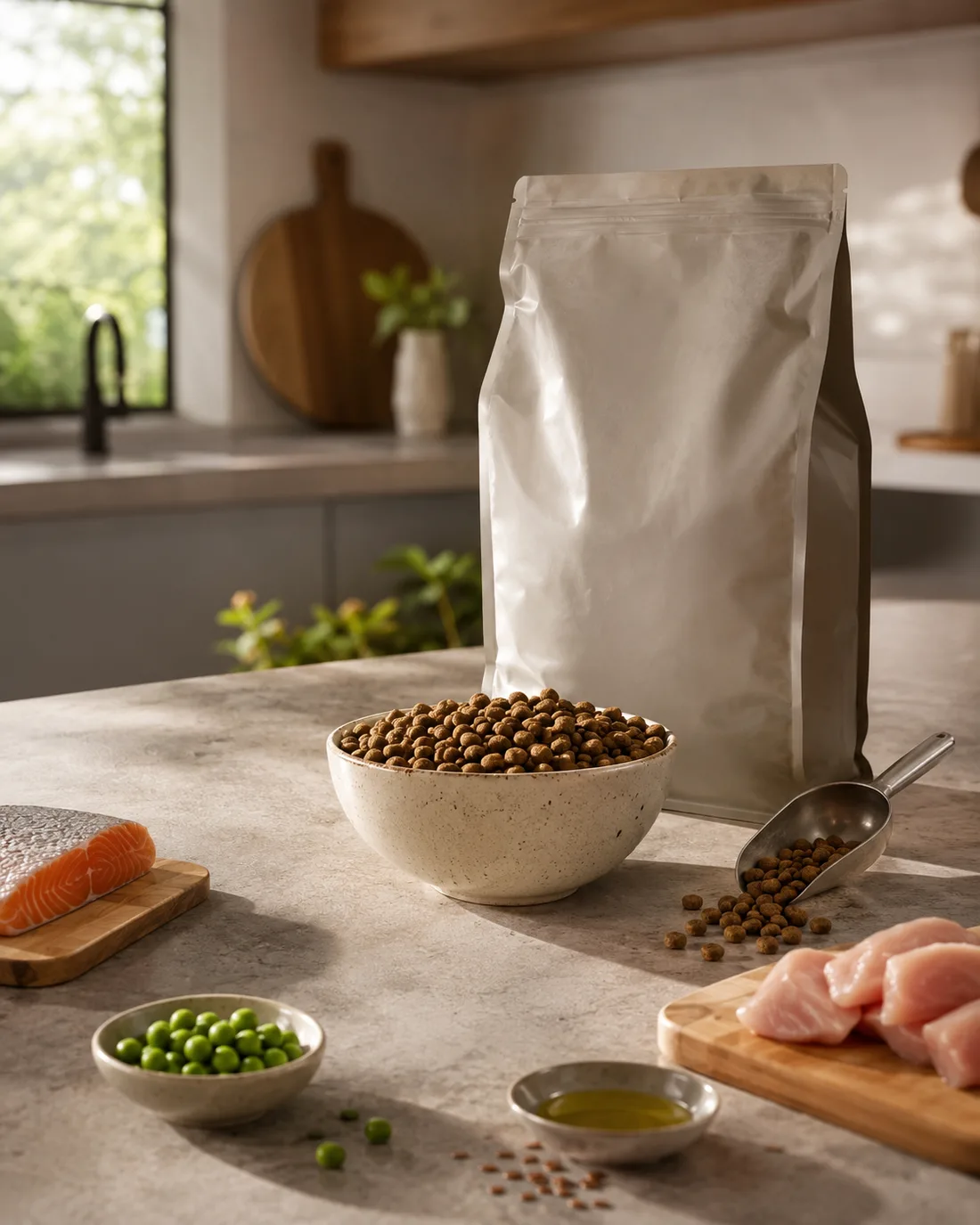
Most dogs are fed ultra-processed diets.
The convenience foods we'd think twice about for ourselves quietly fill the dog bowl too. None of this makes a food “bad”. It's just worth comparing carefully.
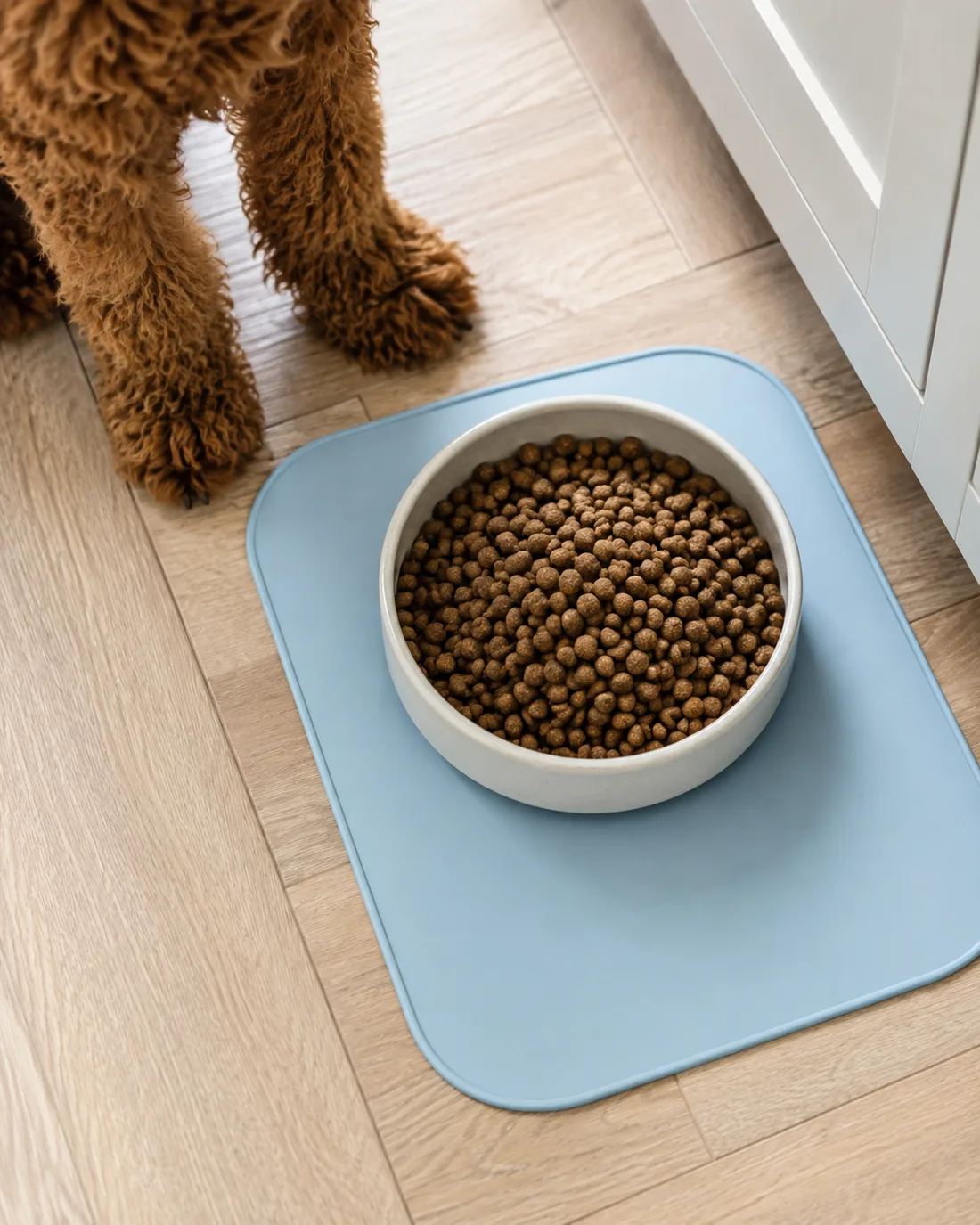
What sits behind “meat meal”
Rendered meat meals vary a lot in quality, and they're not always clearly labelled. Named, single-source proteins are simply easier to read and judge, which is exactly why we score ingredient transparency.4
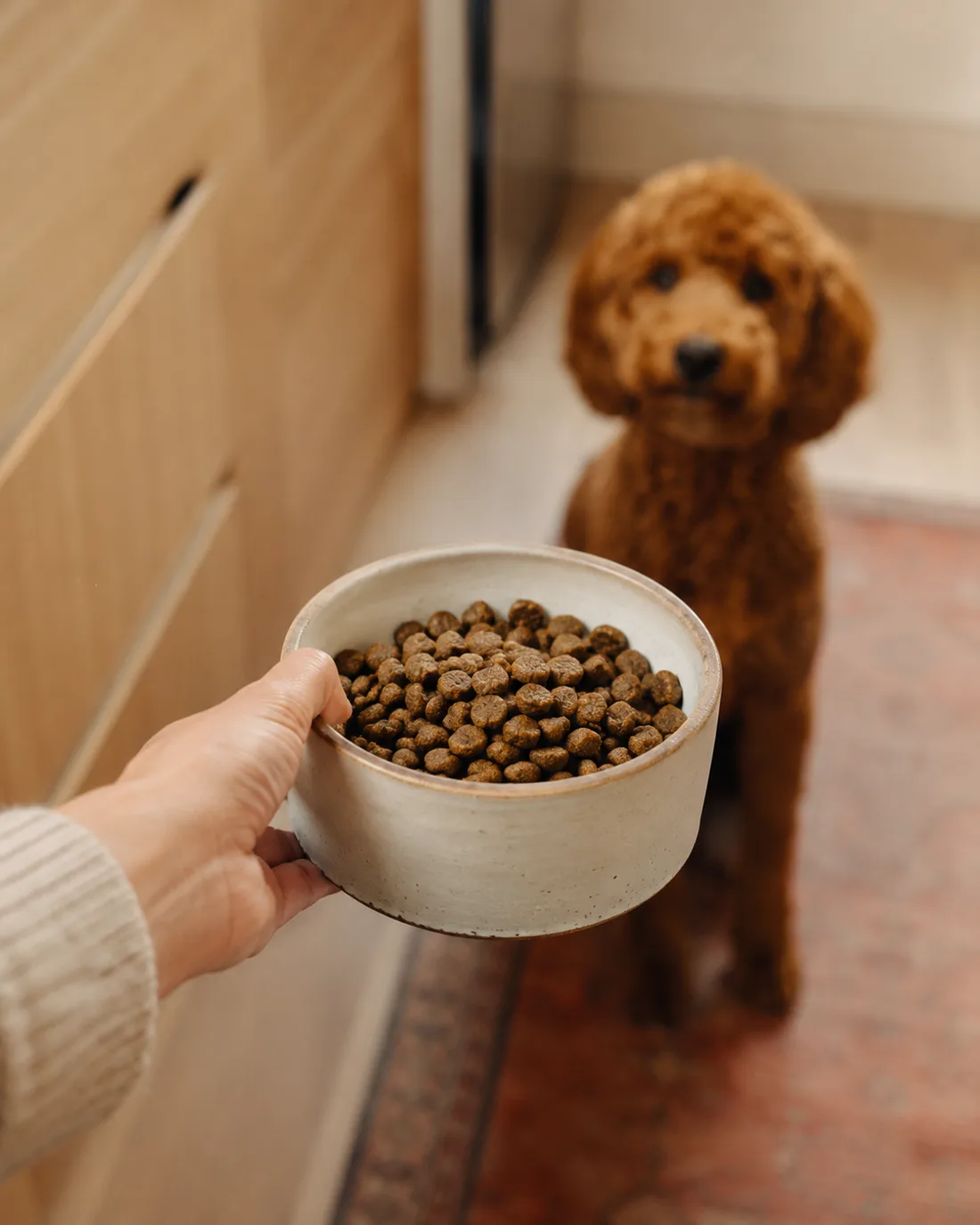
High-heat processing
Most dry food is cooked at high temperatures. Some heat-sensitive nutrients drop off and compounds like AGEs can form, so it's worth weighing how a food is made alongside what it costs.5

Freshness and mould by-products
Grain-based foods that are stored poorly can develop mould by-products (mycotoxins). The better brands batch-test and publish the results, which is a nice transparency signal worth looking for before you buy.6
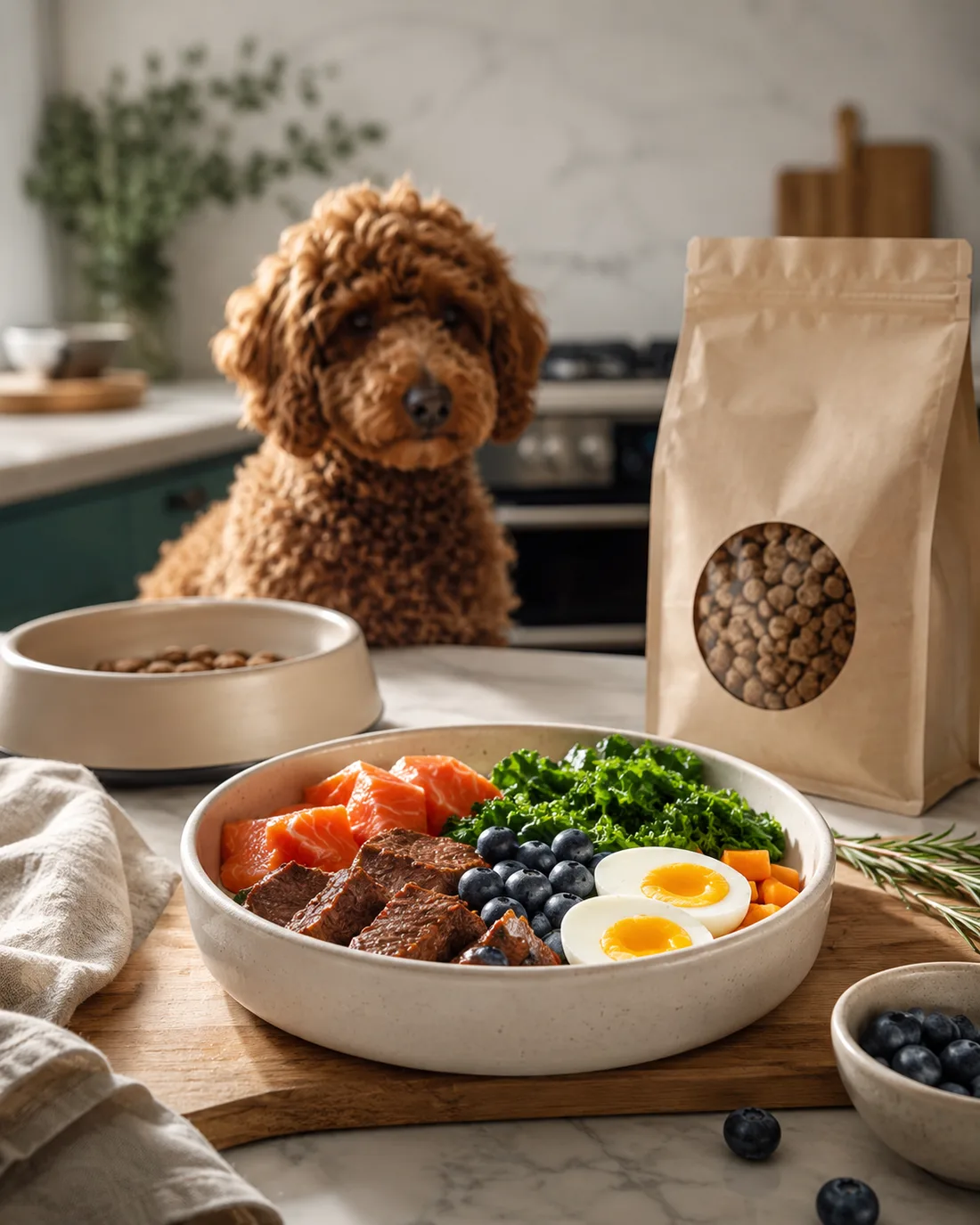
It starts in the bowl
From guesswork to genuine value.
Better ingredients and honest labelling don't have to cost you more. The trick is comparing the right things — and that's exactly what we built our index to do.
Why “premium” doesn't always mean better.
Decades of marketing have quietly turned a few comfortable assumptions into accepted fact. Here's where the evidence is a bit more nuanced.
“Complete and balanced means it’s the best food my dog can get.”
Fact. Complete and balanced just means a food clears AAFCO minimum standards — it's a baseline, not a quality ranking. Two foods can both be “complete and balanced” and still score very differently on ingredients.4
”Kibble cleans my dog’s teeth.”
Fact. Most standard kibble does little for your dog's teeth. Texture and diet are only one piece of the puzzle, and dental trouble is common even in dogs fed dry food.1
“A higher price always means higher quality.”
Fact. Price often reflects the brand and the marketing as much as the food itself. That's exactly why we score price-per-kg and ingredient quality separately, so you can see when you're paying for the food and when you're paying for the label.
“House-brand and premium food are basically the same.”
Fact. Formulas, protein sources and transparency vary quite a bit between them. Surfacing that difference, fairly and on the numbers, is the whole reason we built the index.
What owners notice when the food improves.
Across the reviews in our index, the same handful of changes come up again and again once owners switch to a higher-scoring food.



Four signals that reveal real value.
Every dog food in our index runs through the same published 100-point model. No exceptions, no pay-to-play.
True cost per kg and cost per day
Named proteins, whole ingredients, by-product ratio
Protein, fat, fibre and moisture balance
Country of origin, testing, label clarity
Stop guessing. Compare on what actually matters.
Price-per-kg, cost per day, ingredient quality and transparency, all scored out of 100, independently.
Frequently asked questions
We're not saying that at all. Plenty of dry foods are convenient, affordable and meet AAFCO standards. Our point is narrower: ingredients, processing and transparency vary enormously between products at similar prices, so it pays to compare on more than the sticker price.
Not always. Price often reflects the brand and the marketing as much as what's in the bag. We score price-per-kg and ingredient quality separately so you can see where the real value sits.
We use one transparent 100-point method covering price and value, ingredient quality, nutrition, transparency, availability and what customers actually say. You can read the full breakdown on our methodology page.
No. Pet Reviews is an independent value and comparison resource, not veterinary advice. Always speak to your vet before changing your dog's diet, especially for puppies, seniors or dogs with health conditions.
Citations
- 1
Periodontal disease affects an estimated 80–90% of dogs over the age of three. Cornell University Riney Canine Health Center; Banfield Pet Hospital State of Pet Health. Source
- 2
Approximately 41% of Australian dogs are overweight or obese. Australian Veterinary Association; McGreevy et al. (2005), prevalence of obesity in dogs examined by Australian veterinary practices. Source
- 3
Around 1 in 4 dogs will develop cancer in their lifetime, rising to roughly 1 in 2 over the age of ten. American Veterinary Medical Association; Veterinary Cancer Society. Source
- 4
"Complete and balanced" and ingredient definitions (including by-products and meals). Association of American Feed Control Officials (AAFCO) consumer resources. Source
- 5
High-temperature processing reduces some heat-sensitive nutrients and can form advanced glycation end-products (AGEs). FEDIAF Nutritional Guidelines; peer-reviewed reviews of the Maillard reaction in pet foods. Source
- 6
Mycotoxins can contaminate poorly stored grain-based pet foods; manufacturers are expected to test for them. U.S. Food & Drug Administration, pet food safety. Source
- 7
The oldest verified dog ever was Bluey, an Australian Cattle Dog who lived 29 years and 5 months. Guinness World Records. Source
This page is independent editorial, not veterinary advice. Statistics are drawn from the cited public sources and describe population-level trends, not any individual dog or product. Always speak to your vet before changing your dog's diet.